Unifying the Nike DTC swoosh
Program
Nike DTC : 2020 Brand Plan
Client
Nike
Results
3 Year Strategic Brand Plan
Unifying positioning for all DTC
Executive presentations
Exectuive leave behind
Internal education mobile application
Retail Experience Map Frameworks
4 DTC Employee Videos in key markets
15 Customer Interviews
39 Retail site visits
2 Expert Sessions
20 Retail Experience Case Studies
My Role
Creative Strategy
Brand Planning Leadership
Challenge
As Nike shifted toward a direct-to-consumer (DTC) business model, the organization needed a unified strategic foundation to align global stakeholders, clarify its brand purpose, and ensure consistency across all direct channels driving their goal of $50B by 2020. The existing channel ecosystem spanned multiple platforms (Nike.com, flagship stores, partner outlets, and factory outlets) but lacked a cohesive narrative and positioning strategy. The goal was to define Nike’s identity and purpose in a DTC-first world that put the consumer at the center of experience and brand engagement.
Strategy
The Nike DTC Brand Plan was conceived as a three-year strategic blueprint designed to unify Nike’s direct channels under a singular brand positioning and organizational narrative. The plan sought to:
Clarify Nike’s identity and belief system in the context of a DTC ecosystem
Establish a strategic framework to inform future creative, operational, and product decisions
Rally internal teams and leadership toward a common customer-centric vision
Provide tools for education and activation across functions and markets
This approach emphasized strategic alignment over isolated execution, positioning creative leadership as a catalyst for enterprise-wide cohesion and growth.
Execution
To build this strategic foundation, the program included a comprehensive mix of research, synthesis, and communication assets designed for executive audiences and internal teams:
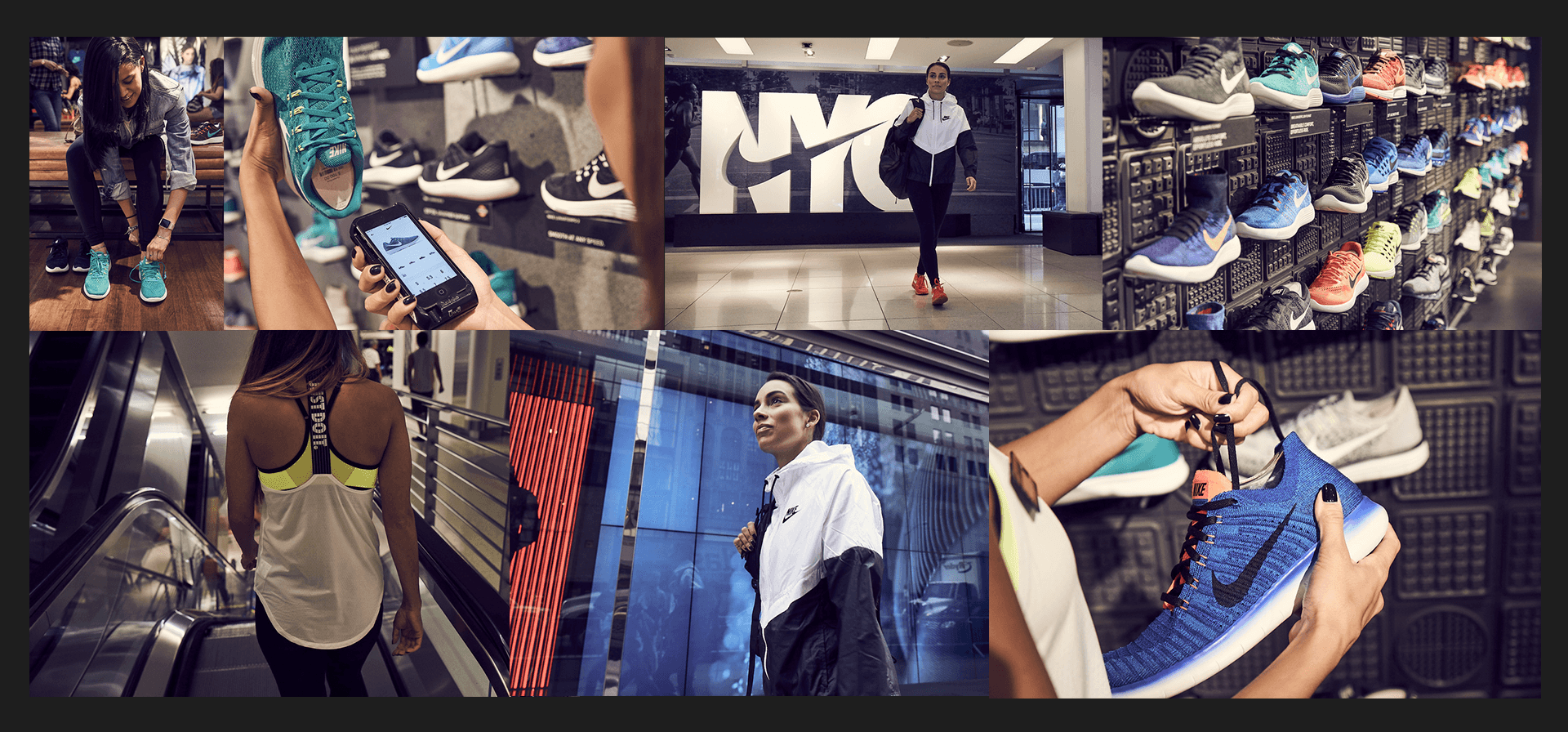
Conducted 15 customer interviews, 39 retail site visits, 2 expert sessions, and 20 retail experience case studies to surface human insights and market realities.
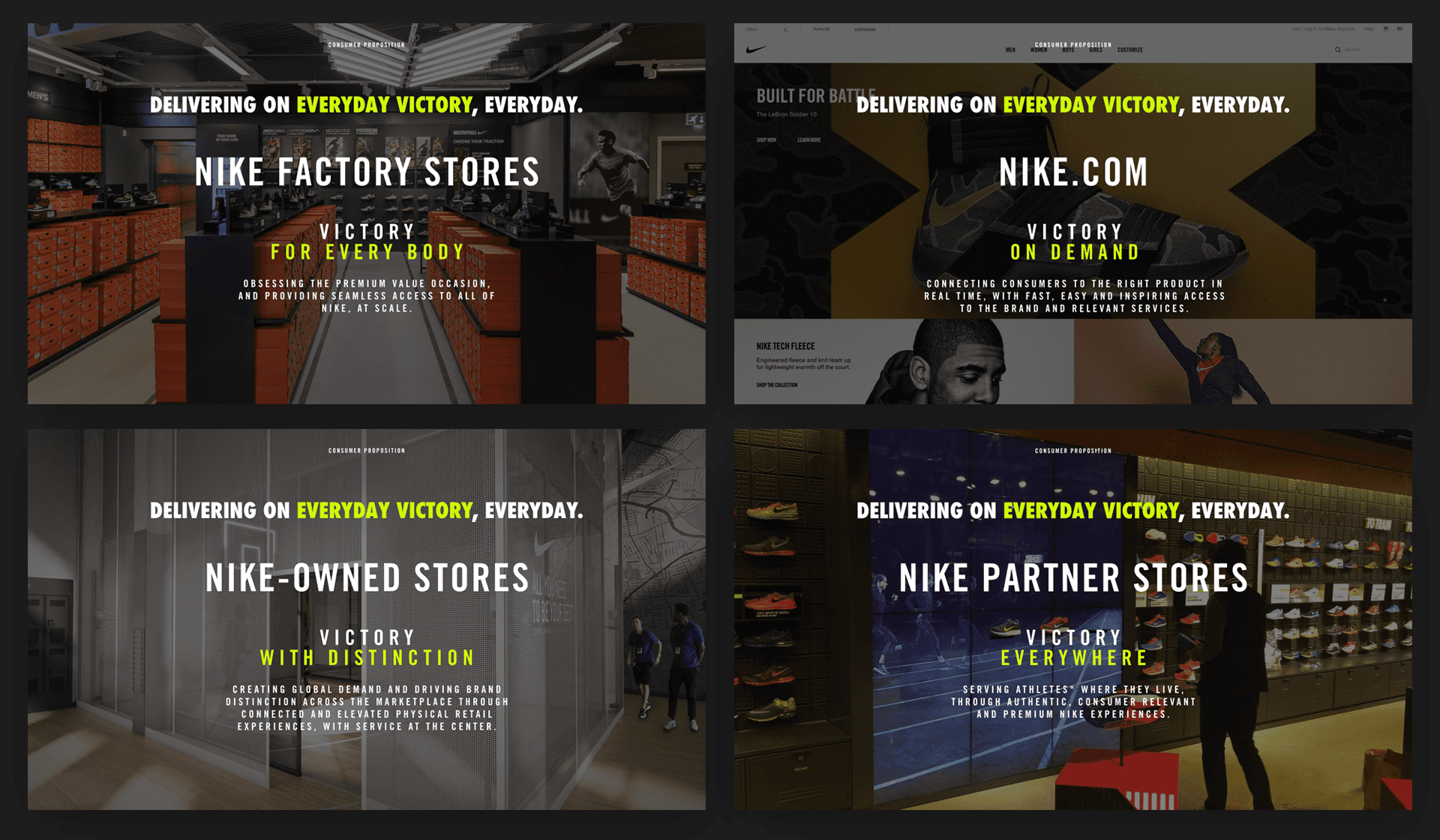
Developed a North Star positioning statement (“Everyday Victory”) to unify all DTC channels and clarify brand belief across Nike’s ecosystem.
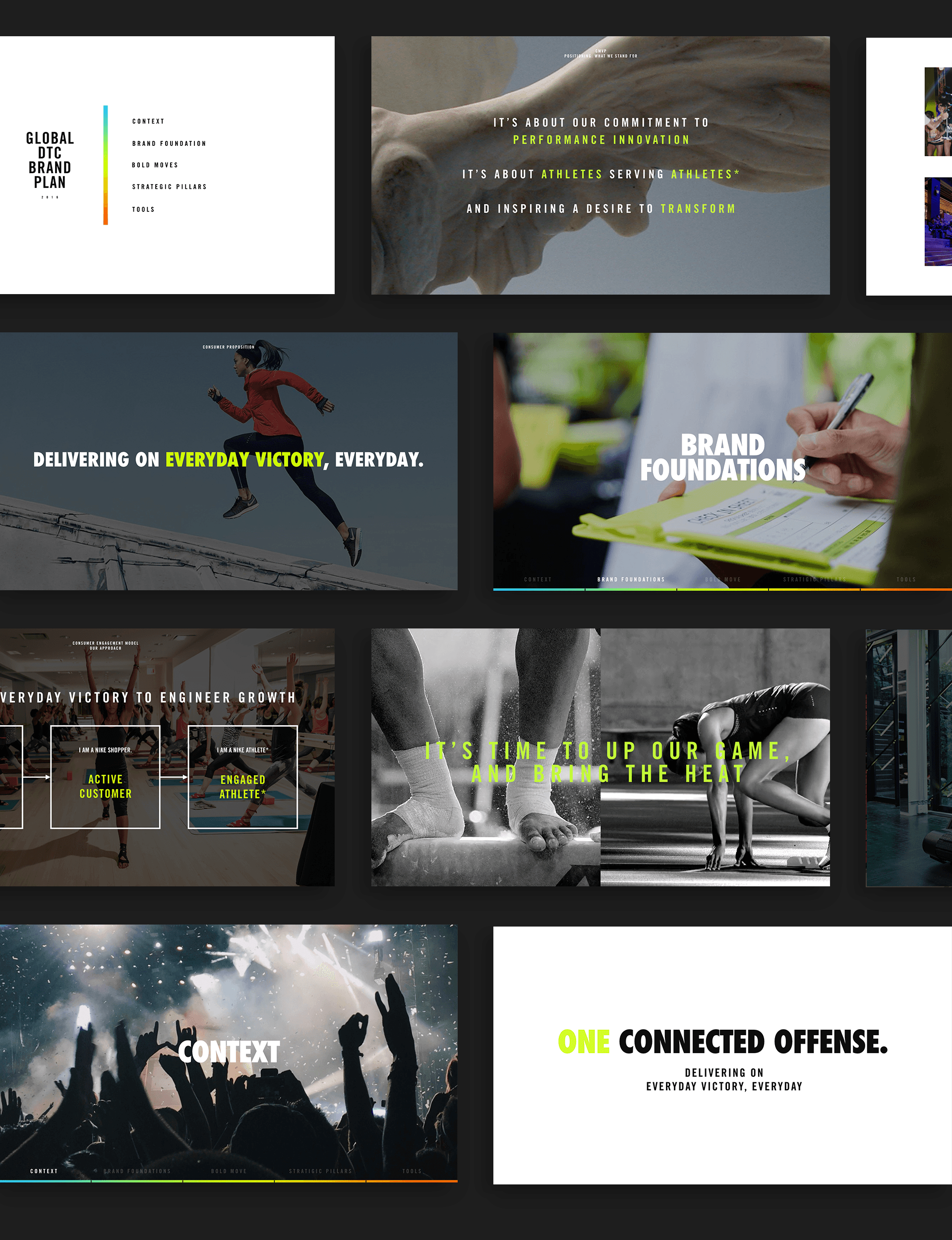
Created a suite of executive presentations and leave-behind collateral (creative decks, editorial materials, videos, and frameworks) to socialize the strategy with senior leaders and functional partners.
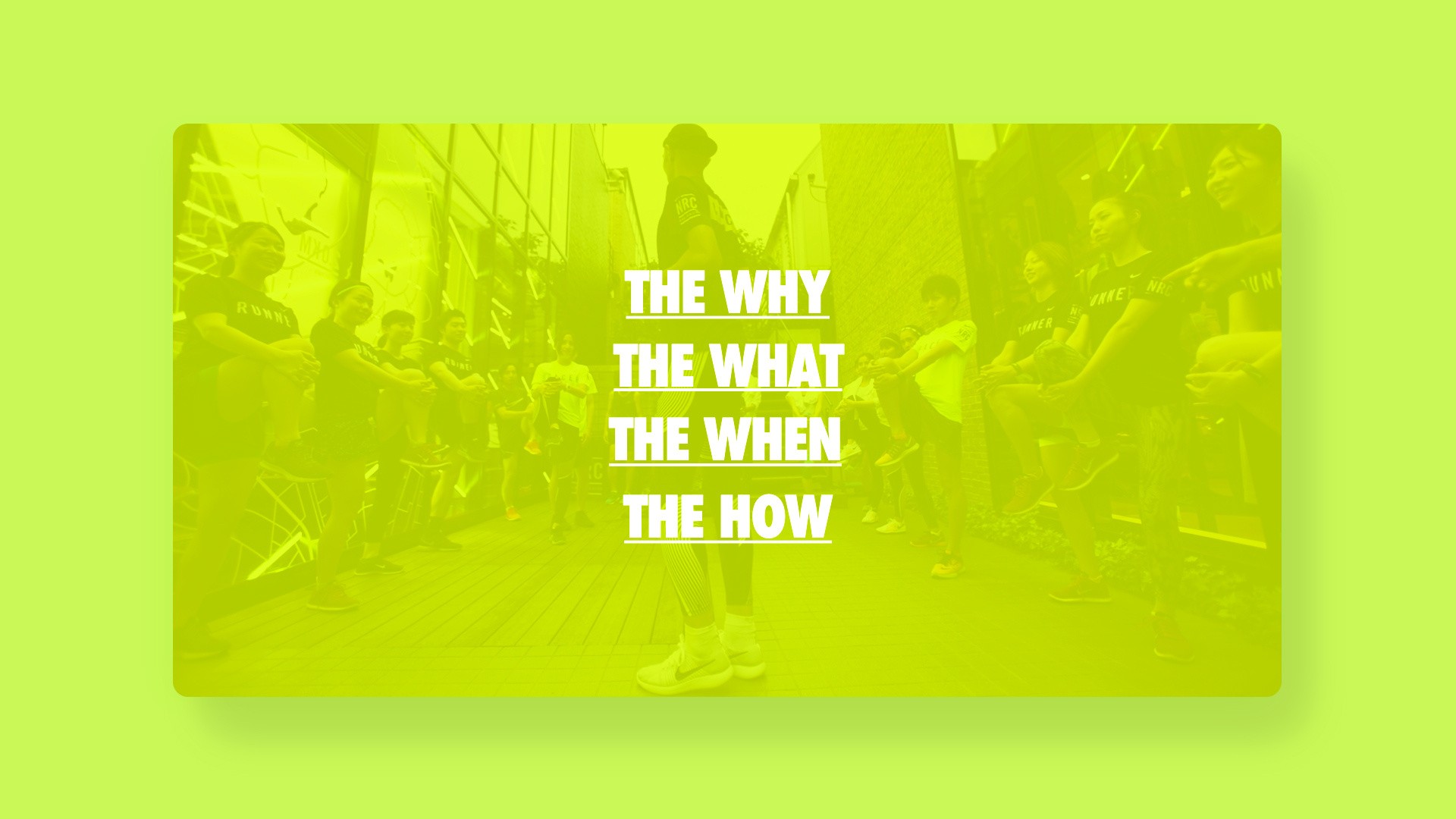
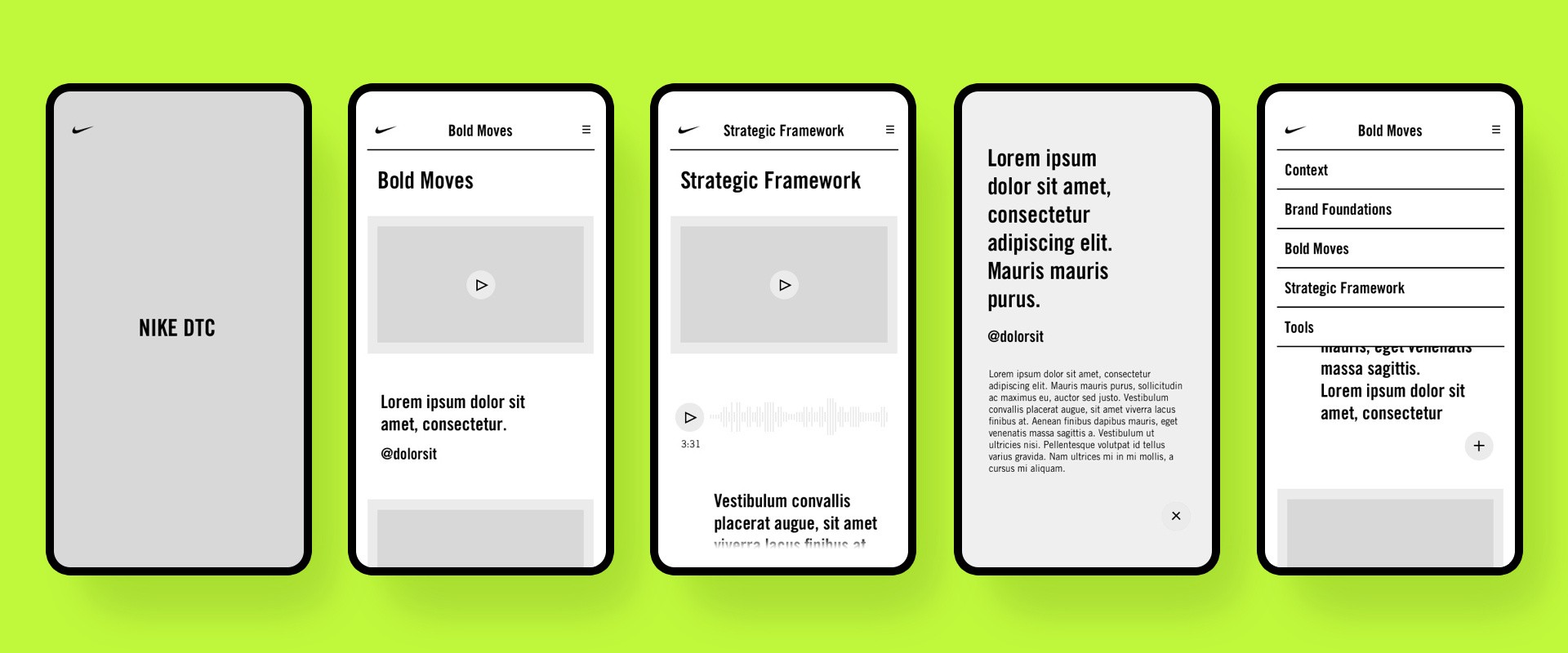
Built retail experience mapping frameworks and an internal education mobile application to support learning, adoption, and consistent execution across Nike’s global DTC teams.
These deliverables were designed not as static artifacts but as living tools to guide decision-making, creative production, and cross-functional alignment across the enterprise.
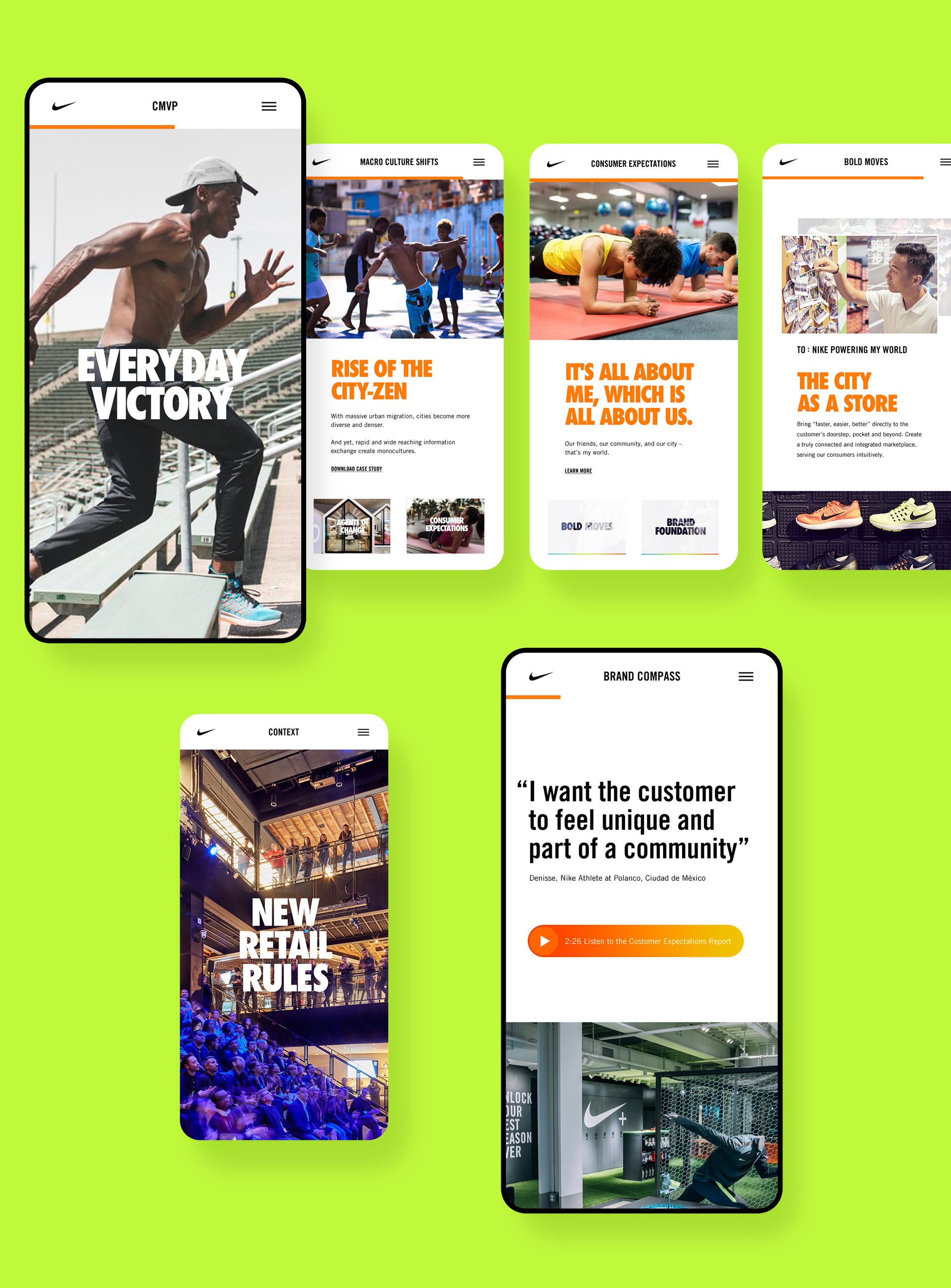
Executive Application, (above) UX wires (below)
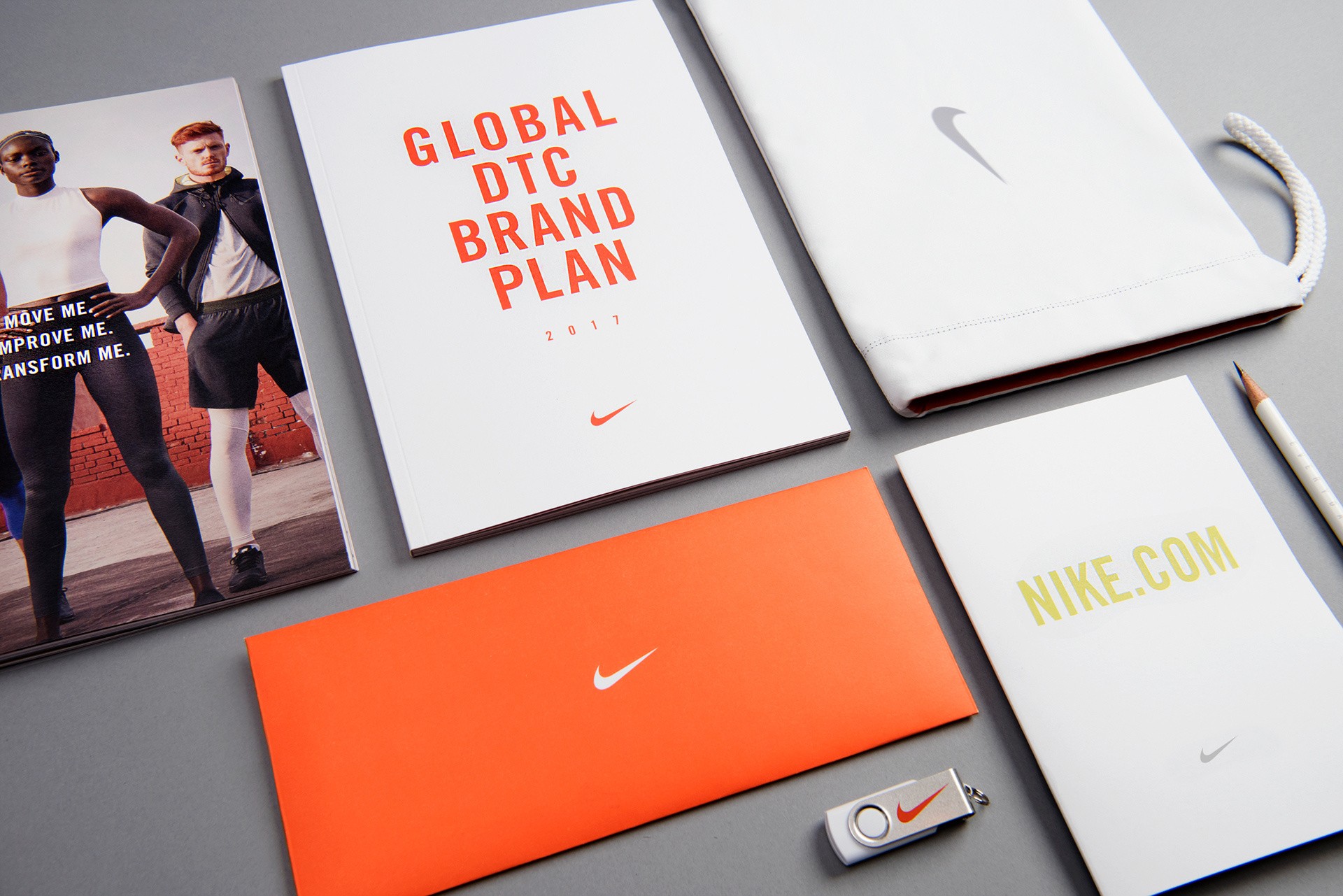
Executive Leave Behind (above)
Results
Strategic Alignment: The Nike DTC Brand Plan established a cohesive brand positioning and forward-looking strategy that informed cross-channel creative and business decisions for the next three years.
Executive Adoption: The work was socialized and accepted by senior leadership teams globally, serving as a foundation for DTC planning and activation beyond individual campaigns.
Operational Enablement: Internal education tools and frameworks allowed Nike teams to translate strategy into experience design, retail innovation, and channel orchestration.
Nike SoHo Store Entrance experience map (above), Cross section experience map (below)
Executive Summary
The Nike DTC Brand Plan demonstrates how creative leadership can operate at the strategic core of enterprise transformation, shaping not just campaigns but the business narrative, purpose, and organizational alignment. By anchoring Nike’s direct-to-consumer evolution in research-driven insights and a unified vision, the initiative provided clarity, direction, and a shared language for teams to execute with confidence in a shifting channel landscape.
Team Credits: Yan Sze Li, Nicole Davis, Gabe Dorosz, Rick Albert, Jeremy Bergstein, Julie Scherr